
Understanding the Command Post: A Beginner’s Guide to How Modern Armies Run the Battlefield
Modern warfare is not only fought by soldiers on the front line. That system lives inside what militaries call the command post.

Before the Battle Begins: The Command System That Makes Modern Warfare Possible
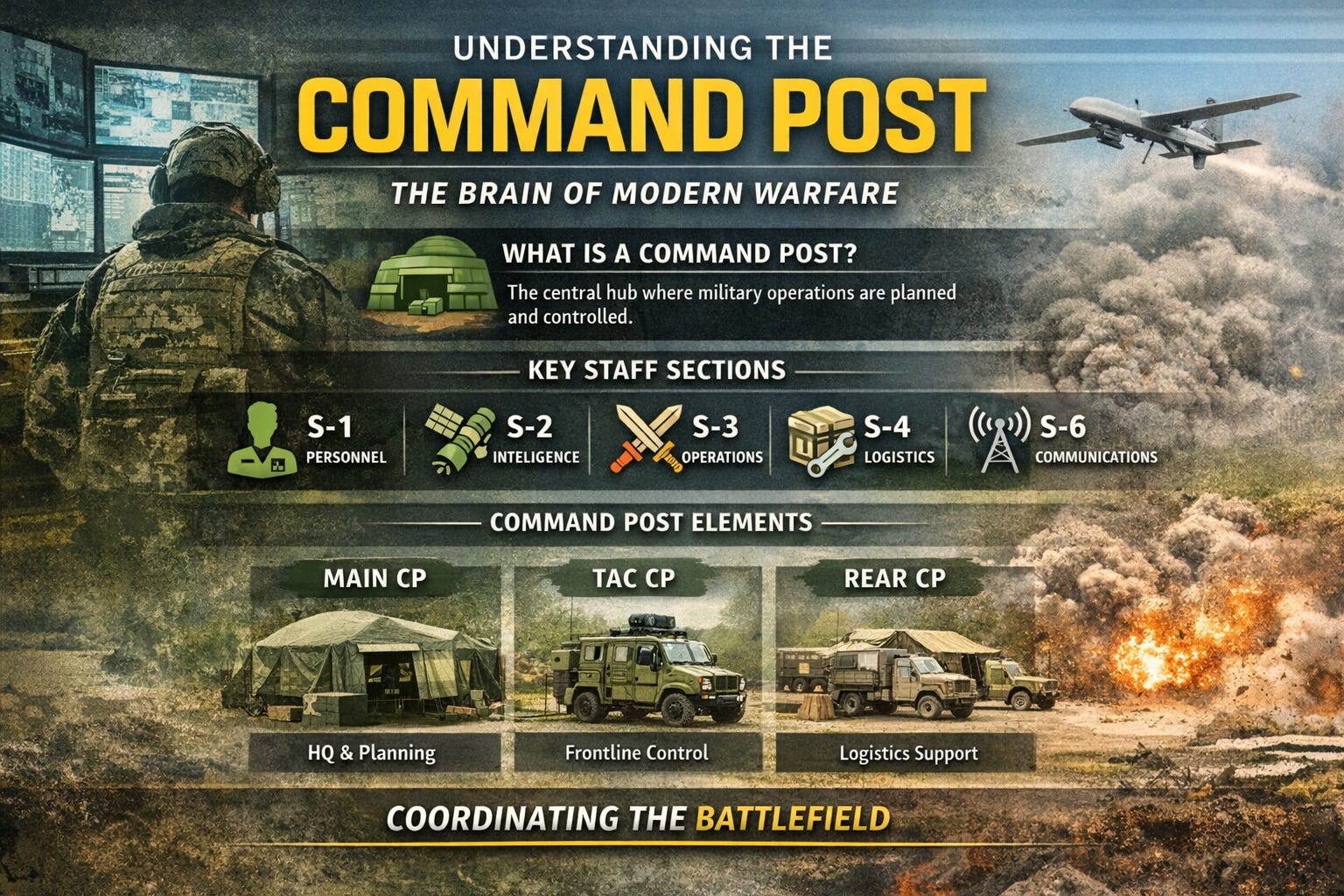
War on the modern battlefield is not only fought by soldiers in trenches, armored vehicles, or artillery positions. Behind every movement of troops, every artillery strike, every drone reconnaissance mission, and every resupply convoy is a command system quietly organizing the battlefield. That system lives inside what militaries call the command post.
For someone beginning to study military strategy, understanding how command posts and staff structures work is essential. Battles are not simply chaotic clashes of units. They are coordinated operations that depend on information, logistics, intelligence, communications, and leadership working together at the same time.
In the Ukrainian Armed Forces, battalions and brigades rely on a structured staff system and multiple command posts to manage the battlefield. These systems allow commanders to collect information, understand the situation, plan operations, and direct thousands of soldiers under extremely dangerous and rapidly changing conditions.
This guide explains how that system works in a simple to understand way.
The Battalion: The First Level of Real Command and Control
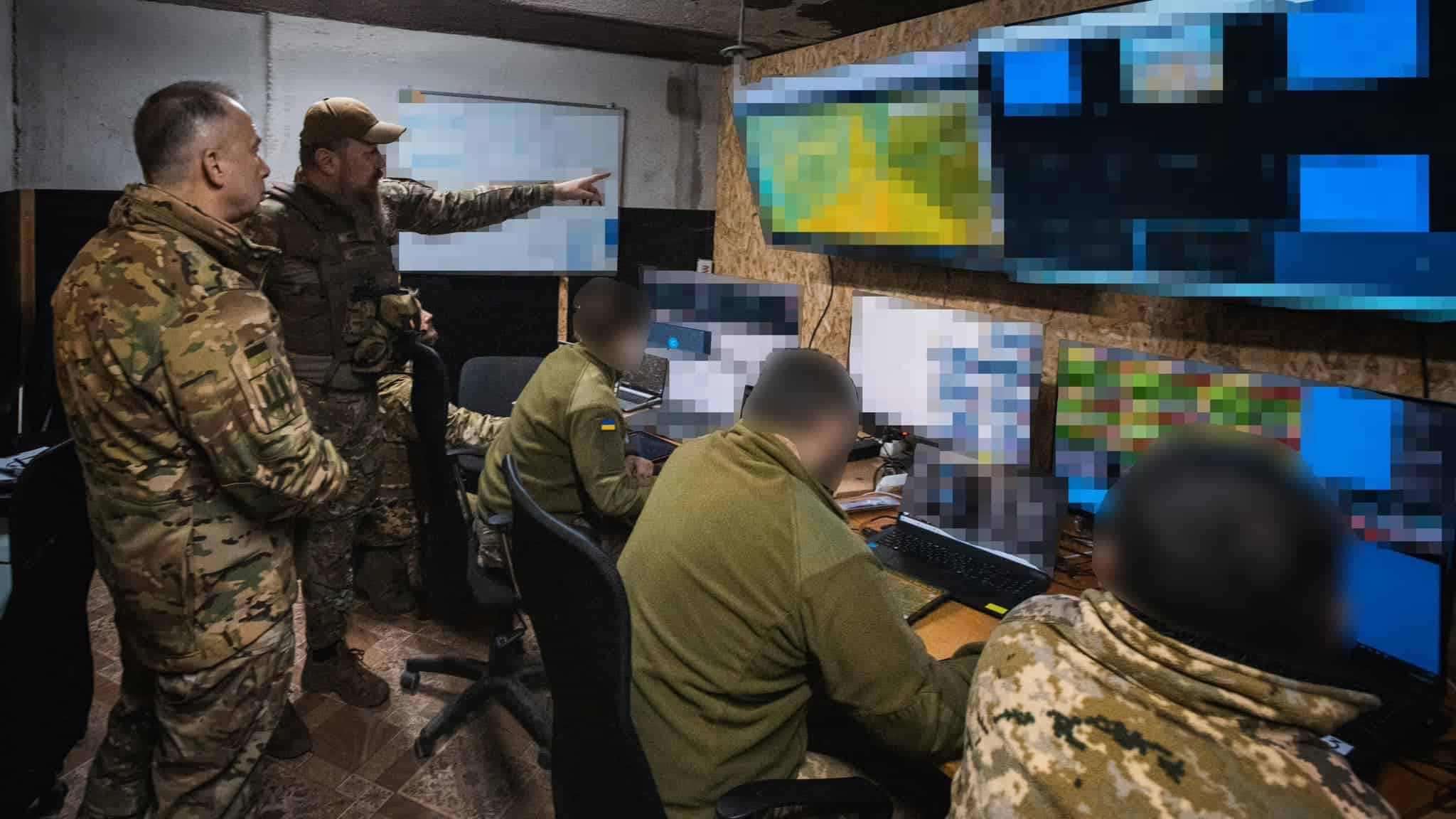
The battalion is the smallest military unit that maintains a full headquarters capable of planning and executing independent operations. A battalion typically contains several companies and generally consists of roughly four hundred to eight hundred soldiers depending on the type of unit.
At the center of the battalion is the commander, normally a lieutenant colonel. The commander is responsible for making operational decisions, directing the unit in combat, and ensuring that the mission assigned by higher headquarters is accomplished.
However, modern warfare produces enormous amounts of information. One person cannot track the battlefield, manage logistics, analyze intelligence, coordinate communications, and plan operations alone.
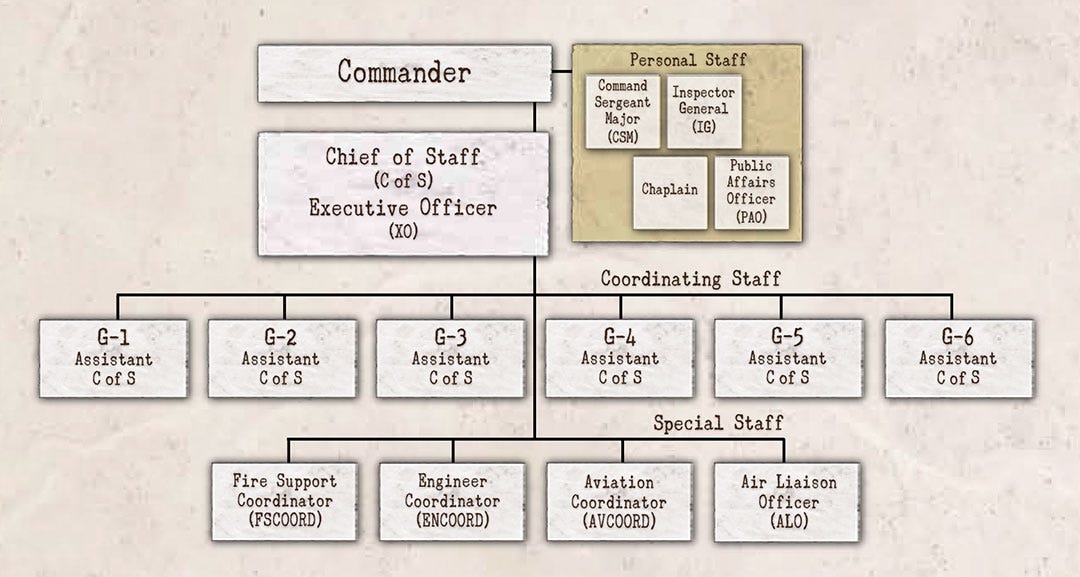
To solve this problem, armies organize headquarters into specialized staff sections. These sections support the commander by managing specific functions of the battlefield.
In battalions these are called the S-staff sections, while at brigade level they become G-staff sections, performing the same roles on a larger scale.
The Battalion Staff Sections
Each staff section within the battalion headquarters performs a specific function that helps the commander understand and control the battlefield.
S-1 – Personnel
The S-1 section manages the human side of the unit. This includes tracking personnel strength, managing casualty reporting, maintaining records, processing awards and evaluations, and coordinating replacements for soldiers who have been wounded, killed, or transferred.
In combat operations, knowing exactly how many soldiers are available is critical for planning and executing missions.
S-2 – Intelligence
The S-2 section is responsible for intelligence and battlefield analysis.
This staff collects information from reconnaissance units, drone operators, electronic surveillance systems, and reports from frontline soldiers. They analyze enemy movements, terrain, and patterns of activity in order to build an accurate understanding of the enemy.
In Ukraine’s war, intelligence sections rely heavily on drone reconnaissance and real time battlefield reporting to track enemy positions and anticipate potential threats.
S-3 – Operations and Training
The S-3 section is the operational heart of the battalion staff.
This section plans missions, coordinates operations, tracks the movement of friendly forces, and ensures that combat tasks are executed according to the commander’s intent. The S-3 also manages training schedules and prepares operational orders.
During combat, the S-3 tracks ongoing battles, coordinates artillery support, manages drone reconnaissance tasks, and integrates intelligence information into operational plans.
S-4 – Logistics
The S-4 section manages logistics and sustainment.
Modern warfare consumes enormous amounts of resources, including ammunition, fuel, spare parts, medical supplies, and food. The S-4 ensures that those resources reach the soldiers who need them.
This section coordinates transportation, maintenance operations, equipment repairs, and supply distribution so that the battalion can continue fighting.
S-6 – Communications and Signal
The S-6 section is responsible for communications and information systems.
This includes radio networks, digital communications, satellite links, encryption systems, and data networks used to share battlefield information.
Without reliable communications, command and control collapses. The S-6 ensures that the battalion headquarters remains connected to subordinate companies, higher headquarters, and supporting units.
The Command Post: The Physical Center of Control
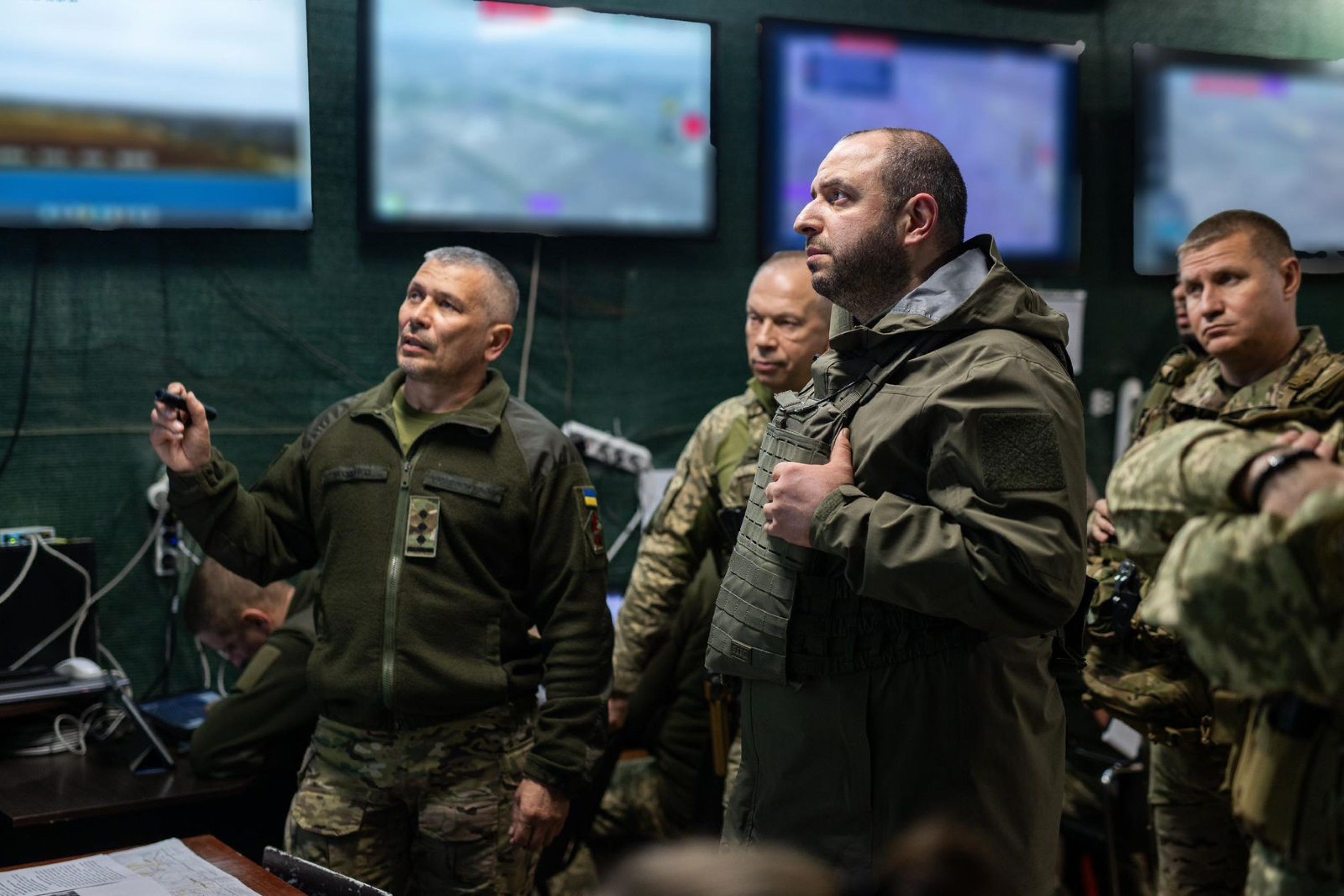
The battalion staff operates from a location known as the command post. This is the physical center where information is collected, analyzed, and turned into decisions and orders.
Command posts serve as the physical centers of command and control within Ukrainian military units. They allow commanders and staff to collect information, maintain situational awareness, coordinate operations, and issue orders to subordinate units.
Because modern battlefields are heavily surveilled by drones, artillery, and electronic warfare systems, command posts must be carefully organized and protected.
Instead of concentrating everything in one location, Ukrainian command posts are typically dispersed and organized into several separate elements to ensure survivability and continuity of command.
At both battalion and brigade levels, command posts are normally divided into three major components.
The Main Command Post, the Tactical Command Post, and the Rear Command Post.
Each element performs a different role while remaining connected through secure communications networks.
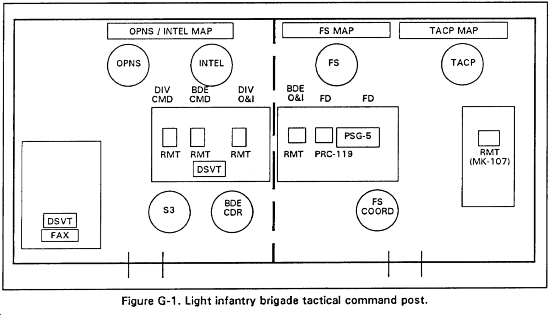
Main Command Post (Main CP)
The Main Command Post is the primary operational headquarters of the battalion or brigade. It is where the majority of the staff operates and where operational planning and coordination take place.
The Main CP is typically located several kilometers behind the forward line of troops in a concealed and protected location such as wooded terrain, hardened buildings, underground structures, or dispersed vehicle formations.
Because command posts are priority targets for enemy reconnaissance and long range fires, Ukrainian units frequently relocate the Main CP to reduce vulnerability.
Within the Main CP, staff sections operate together in a coordinated environment that allows rapid information exchange.
Intelligence officers analyze incoming reports from reconnaissance units, drone teams, and subordinate units. Operations officers track current combat activity and prepare future missions. Logistics personnel coordinate supply operations and equipment support. Communications specialists maintain radio and digital networks connecting the headquarters to subordinate units and higher command.
The Main CP maintains the unit’s operational picture and supports the commander in planning and decision making.
It also serves as the central hub for coordination with higher headquarters and adjacent units.
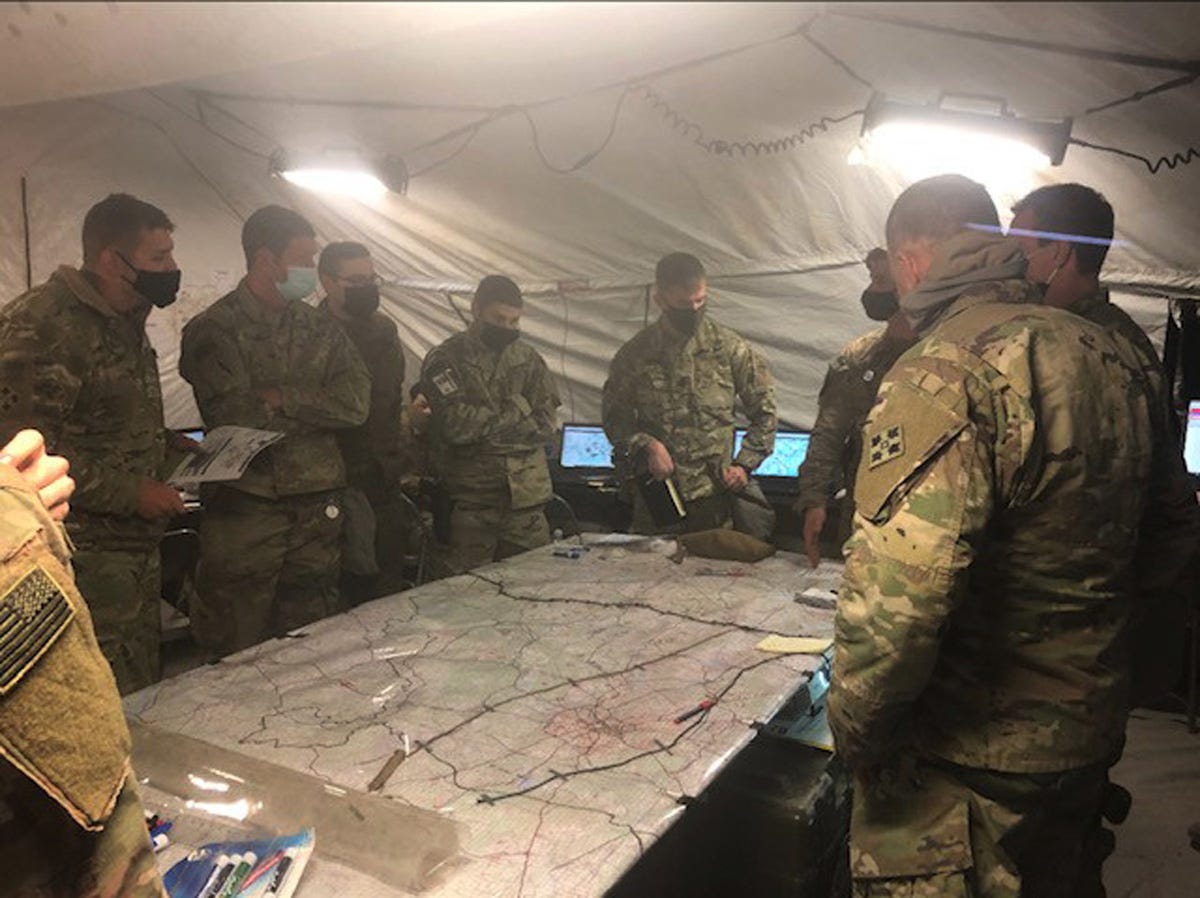
Tactical Command Post (TAC CP)
The Tactical Command Post is a smaller, highly mobile command element positioned closer to the forward edge of the battlefield.
Its purpose is to allow the commander and a small staff to remain directly connected to the fight.
The TAC CP normally includes the commander, a small operations cell, communications personnel, and sometimes a forward intelligence representative.
This command element operates from mobile vehicles, armored command vehicles, or temporary field positions that can relocate quickly.
Because it is positioned closer to combat units, the TAC CP provides the commander with immediate awareness of tactical developments. It allows rapid coordination with frontline companies and battalions and supports quick decision making during active engagements.
In many Ukrainian units, the Tactical Command Post plays an especially important role during offensive operations or dynamic defensive battles where commanders must remain closely connected to maneuver elements.
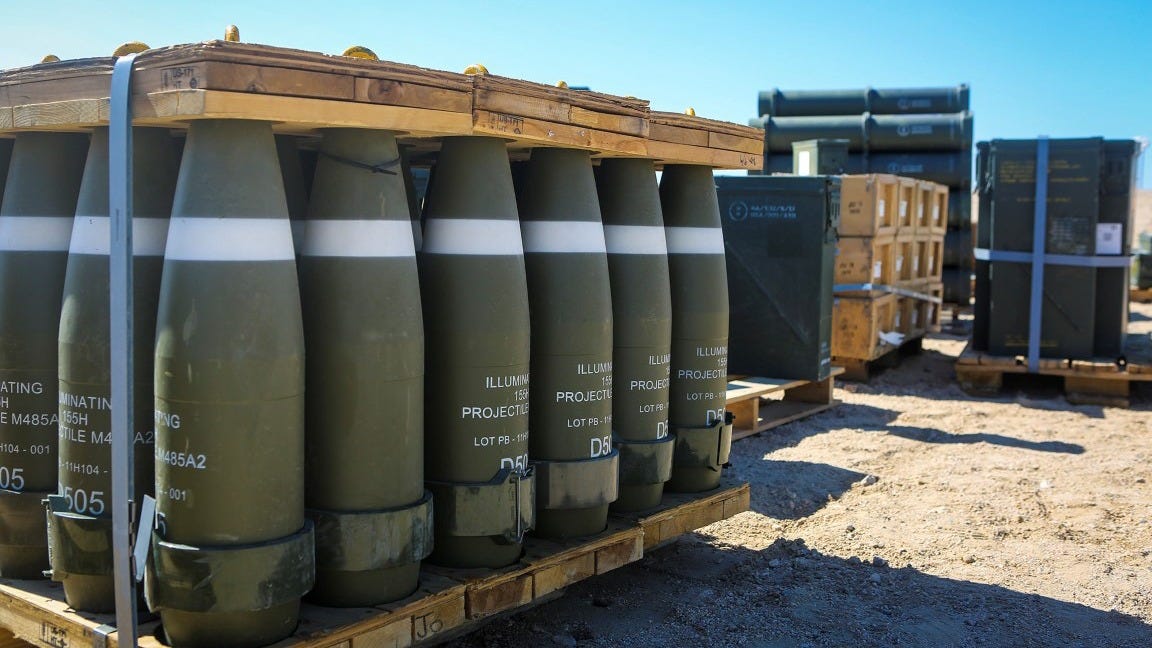
Rear Command Post (Rear CP)
Further behind the lines is the Rear Command Post.
The Rear CP focuses primarily on sustainment, logistics, and administrative support. It is usually located further to the rear of the operational area, often near supply hubs or logistical support bases.
The Rear CP manages supply distribution, transportation, maintenance operations, casualty evacuation coordination, and equipment repair.
Personnel staff also operate from this location to manage replacements, personnel accountability, and administrative functions.
While the Main CP and TAC CP focus on combat operations, the Rear CP ensures that the unit maintains the resources necessary to sustain those operations over time.
This separation allows the operational headquarters to remain focused on the battlefield while logistical operations continue without disruption.
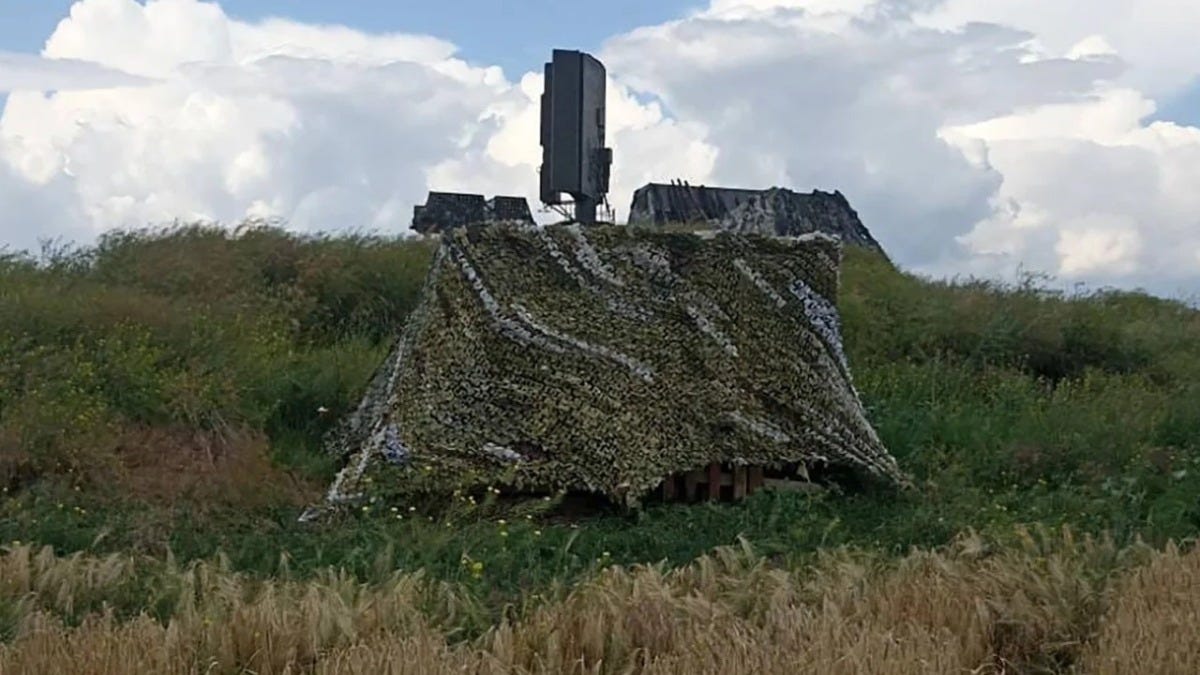
Command Post Survivability and Dispersion
Modern Ukrainian command post operations emphasize dispersion and mobility due to the widespread use of drones, satellite reconnaissance, and long range precision fires by Russian forces.
Command posts rarely operate from a single large location. Instead, elements are dispersed across multiple positions connected by secure communications networks.
Vehicles are often separated by distance, camouflage is used extensively, and positions are frequently relocated.
Command post personnel also employ strict electronic discipline to reduce the risk of detection through signal interception.
This decentralized command post structure ensures that even if one command element is targeted, the unit can continue to operate through the remaining command nodes.
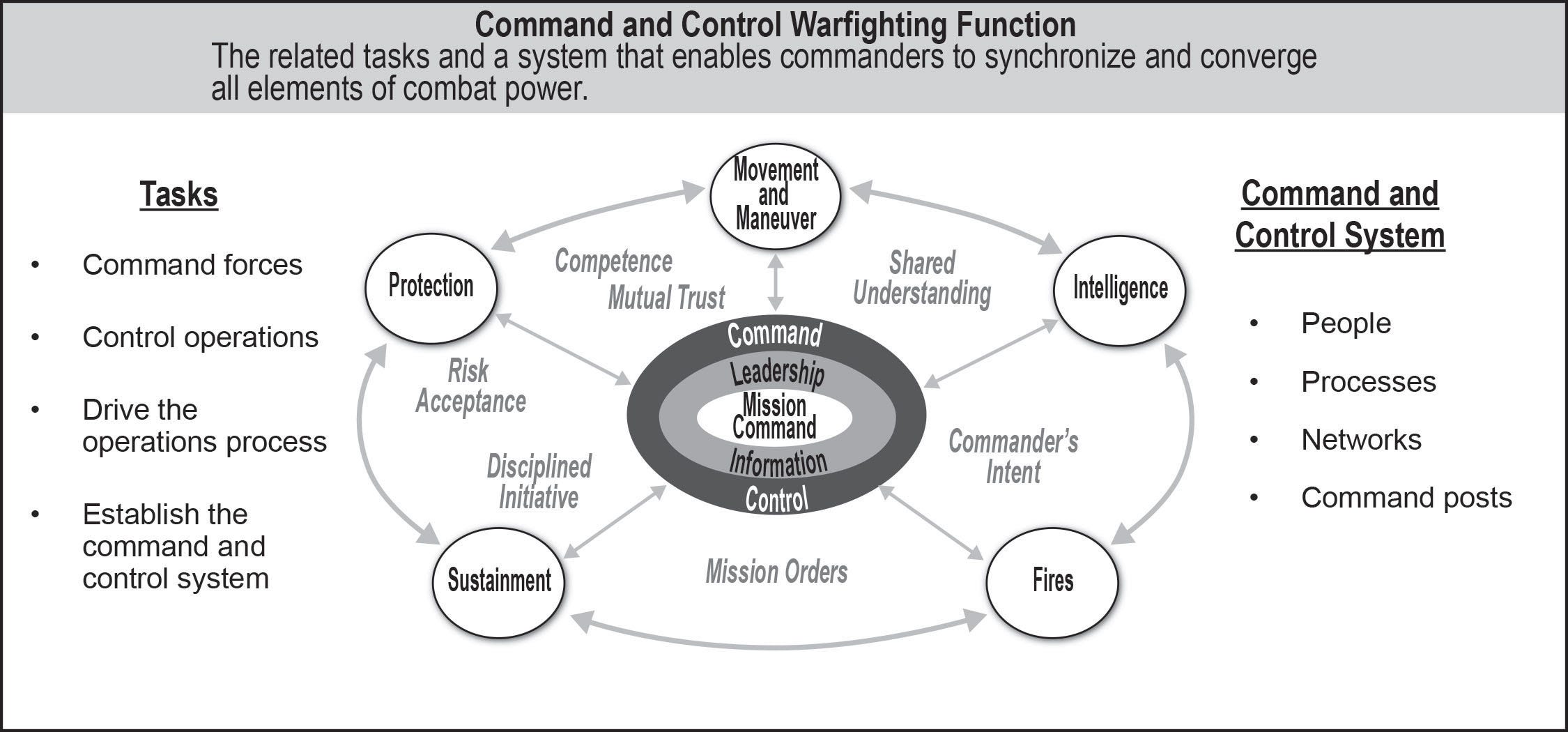
Information Flow Between Command Posts
Information flows continuously between the Main CP, TAC CP, Rear CP, subordinate units, and higher headquarters.
Reports from frontline units, reconnaissance teams, drone operators, and electronic surveillance systems are transmitted to the staff where they are analyzed and incorporated into the operational picture.
The operations staff then updates the commander and coordinates actions with other staff sections.
Orders are issued to subordinate units through radio networks, digital communication systems, and liaison officers.
The Tactical Command Post often provides real time battlefield information to the Main CP, allowing the staff to adjust plans and coordinate supporting assets such as artillery, drones, or reinforcement units.
This constant exchange of information allows commanders to make decisions quickly and adapt to rapidly changing battlefield conditions.
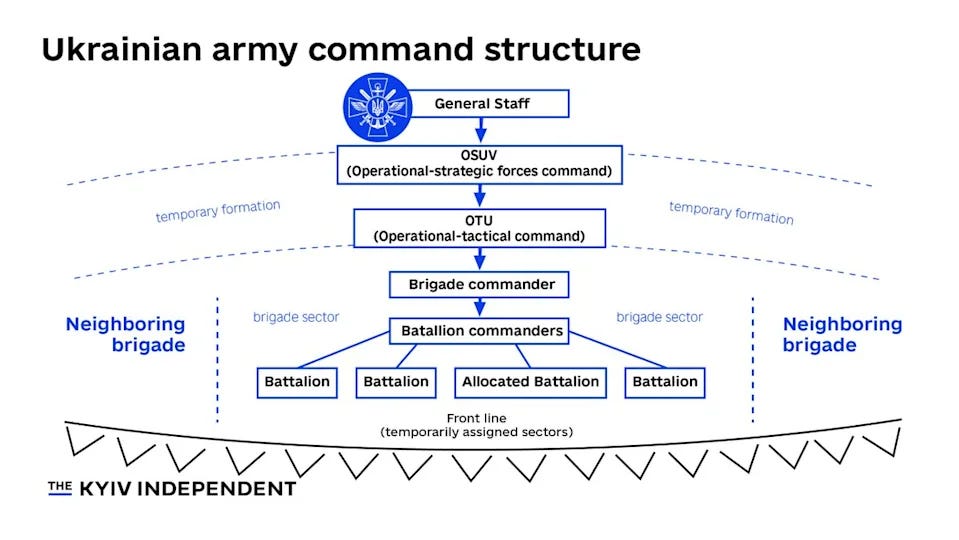
Brigade Command Post Structure
At the brigade level, the same structure exists but on a much larger scale.
A brigade may control several battalions along with artillery units, reconnaissance formations, air defense elements, engineers, and logistics battalions.
Brigade headquarters therefore requires a larger staff and more sophisticated command post system.
Brigade headquarters often operate several command posts simultaneously, including the Main CP, TAC CP, and Rear CP, with additional planning and intelligence cells supporting ongoing operations.
Brigade staffs must coordinate intelligence collection, artillery fires, air defense operations, electronic warfare, logistics support, and maneuver units across a wide operational area.
This requires reliable communications systems and a well structured command post network that allows rapid decision making and synchronization of combat power across the battlefield.
The System Behind Every Battle
The physical organization of command posts within Ukrainian battalions and brigades is designed to ensure effective command and control while maintaining survivability in a highly contested battlefield environment.
By distributing command functions between the Main CP, TAC CP, and Rear CP, Ukrainian units maintain operational flexibility and continuity even under heavy enemy pressure.
This decentralized command post structure allows commanders to remain closely connected to frontline operations while still maintaining the planning and coordination capabilities required to manage complex military operations.
Behind every maneuver, artillery strike, and defensive action is a team of staff officers quietly organizing the battlefield.
The command post is where the chaos of war becomes coordinated action.
Слава Україні. Героям слава!
